
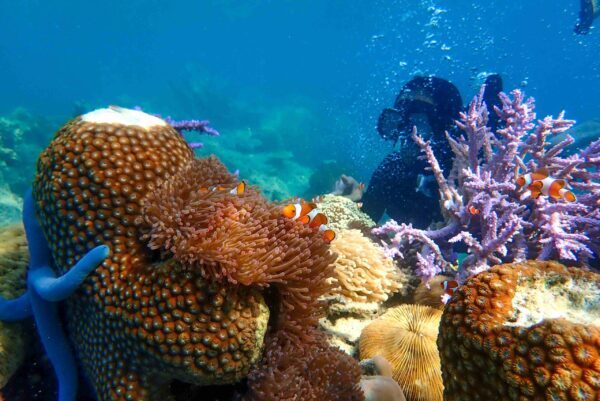
A mattress under the stars. Salt in your eyebrows by morning. Reefsleep isn’t about ticking off reef tours, it’s about pausing long enough to notice the quiet between currents. Moored far from shore, the pontoon holds just enough: shelter, stillness, sky. The comforts are deliberate, but so are the absences. In that balance between presence and restraint, a new kind of marine travel begins to take shape – less spectacle, more listening.
What Makes Reefsleep a Model for Responsible Tourism
Sunset changes the reef. After the last catamaran departs, silence settles. Or rather, a different rhythm takes over: fish graze coral, currents speak through rope lines, and guests step softer. A Reefsleep experience isn’t about access. It’s about absence. Of intrusion, of traffic, of unnecessary light.
The floating platform hosts no more than 30 people overnight. That number isn’t arbitrary – it’s calibrated. Just enough to sustain the operation, not enough to strain the habitat. Guests are asked to dim lights, reduce motion, observe from a distance. Most comply. Not from rules alone, but because the setting makes disobedience feel… off.
Even conversations drop a register. Guides don’t lecture. They gesture. Pause. Let visitors see for themselves how reef life resumes once human volume lowers. That restraint – shared, felt – defines responsible tourism. Reefsleep doesn’t isolate you from nature. It teaches you how not to dominate it.
The reef becomes a mirror for human intention. When presence softens, interaction deepens. When noise withdraws, color expands. In that quiet, a form of mutual recognition happens – brief, subtle, but unforgettable. It may not be the experience people expect. But it’s likely the one they remember.
Infrastructure That Leaves No Trace
Steel beams, salt-worn ropes, fabric shelters. From a distance, the pontoon seems impermanent. Up close, it’s efficient. Systems hum just under the soundscape: solar inverters, filtered tanks, discrete compost modules. Nothing feels overbuilt. Which may be why it works.
Power is solar. Water runs in a closed-loop for hygiene. Waste is sorted, sealed, and ferried back to the mainland. Crew move like clockwork between mechanical and marine protocols, rarely interrupting the rhythm of the guests. They aren’t background – they’re buffer.
This model contrasts sharply with day-boat excursions, where engines idle and passengers rush. Reefsleep slows the experience down. Less action, more attention. From above, it’s just a dot on blue. From onboard, a whole blueprint for coexistence.
Maintenance is invisible, yet constant. Filters are checked before dawn. Solar yield recalibrated at midday. These routines unfold quietly, almost rhythmically, mirroring the tide itself. The absence of disruption becomes its own kind of hospitality – one that protects without announcing itself.
Eco-Features:
- Solar-powered operations and low-energy lighting
- Closed-loop water system for cleaning and hygiene
- Onsite waste separation and removal protocols
- Technical water reuse from the surrounding ocean
- No direct contact between structure and reef bed
Visitor Behavior That Supports the Ecosystem
Guests arrive with expectations. Some adjust. Others resist. But by nightfall, the atmosphere itself changes posture. Softer footsteps, hushed tones, long pauses at railings. Responsible behavior isn’t enforced – it’s absorbed.
There are few instructions, mostly modeling. Guides move deliberately, demonstrating without fanfare how to move, watch, and wait. Wildlife is not coaxed. It appears when ready. Reefsleep normalizes delay, patience, stillness.
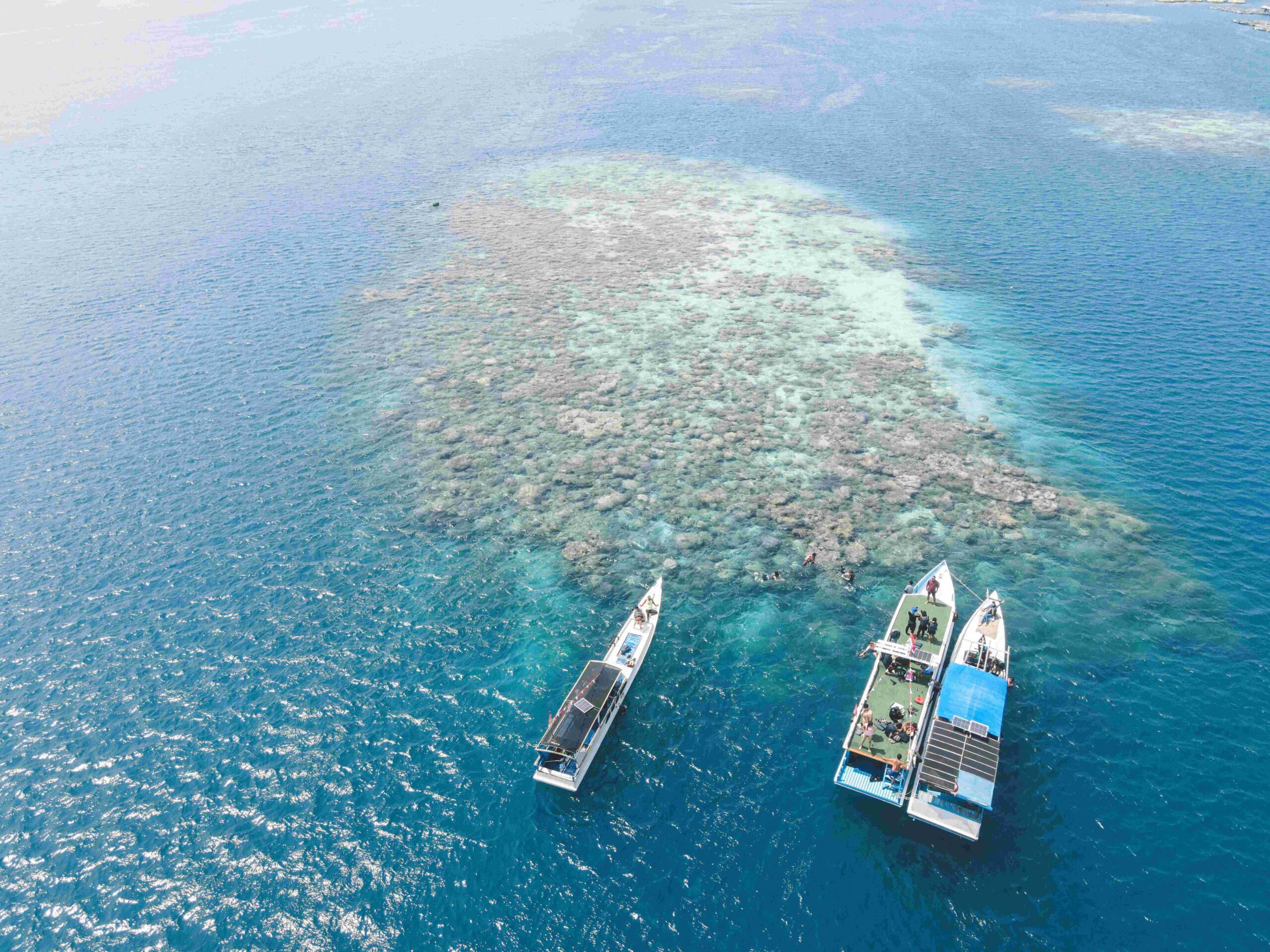
Ambient light is minimal. Conversations are more often between individuals and sea creatures than among groups. Even the act of photography becomes hesitant, filtered through low light and intent. Visitors become participants in a marine ecosystem, not just observers.
What emerges is a kind of shared etiquette – one shaped not by signage but by setting. The platform becomes a stage, and the absence of performance a message in itself. It is not about doing, but about doing less, deliberately.
This behavior isn’t isolated. It aligns with broader responsible tourism principles found across guokka selfie guidelines and eco hotel best practices. Presence is calibrated, not maximized. Silence counts.
Connecting Reefsleep to Australia’s Sustainable Travel Routes
Reefsleep rarely stands alone. It folds into a wider thread along Australia’s east coast. Visitors who begin their trip in Byron Bay often carry habits from land to sea. Reusable gear. Minimalist packing. Awareness of place.
This isn’t coincidental. Operators along this route increasingly mirror each other. Shared emphasis on reduced footprint, local partnerships, and ecosystem-based decision making. Reefsleep, in this regard, is both a product and signal. It shows what is possible offshore.
There is continuity across distances. What begins as a compostable takeaway in Byron becomes a zero-waste ethic at sea. What starts as beach cleanup translates into respectful silence over coral. These aren’t isolated gestures. They accumulate.
Connections matter. Not just ferries and flights, but values that travel with travelers. A night spent on the reef is more than a memory – it’s a rehearsal for how tourism might feel elsewhere, if designed for listening. For restraint. For continuation.